The craft
Eleven centuries of Samarkand paper
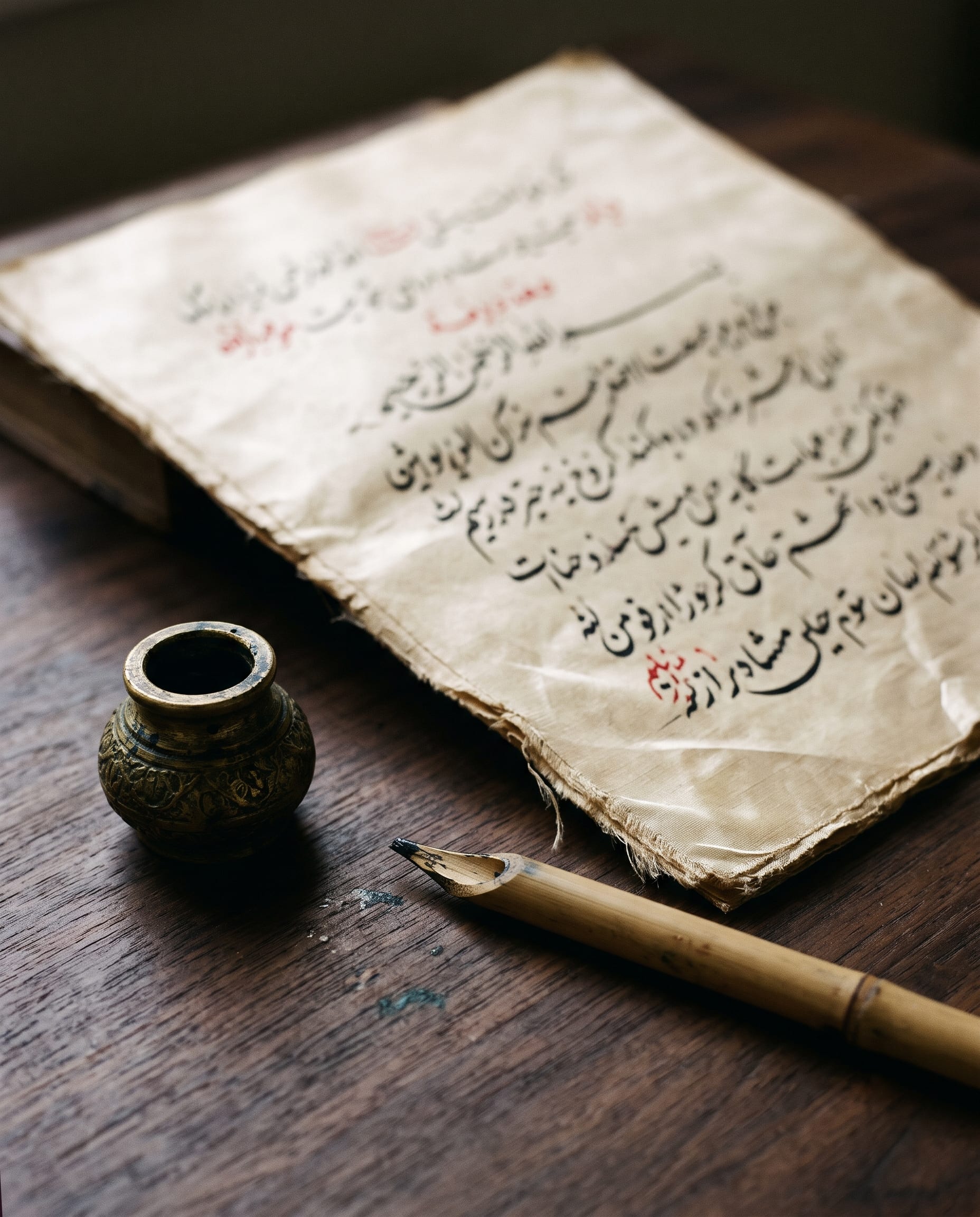
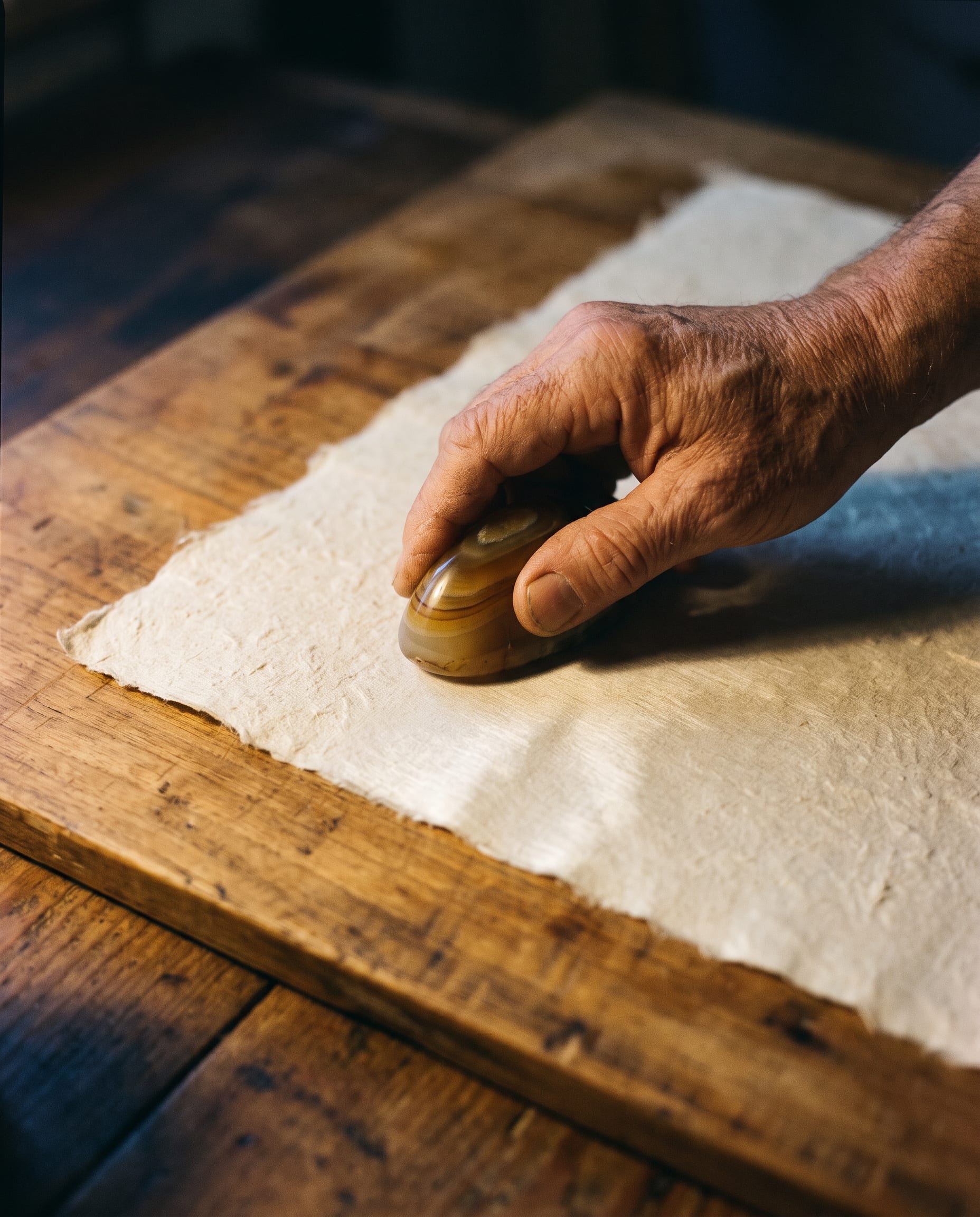
Fig. 3. The agate stone that gives silk paper its name, and its sheen.
From a battlefield secret to our water wheel
751
The secret reaches Samarkand
According to the old chronicles, Chinese papermakers taken prisoner after the Battle of Talas brought their craft to Samarkand. Local makers soon swapped hemp and rags for the bark of the mulberry trees that grew everywhere in the valley.
10th c.
The paper of the Islamic world
Samarkand paper travelled with the caravans to Baghdad, Damascus and Cairo. Writers of the time noted that it had driven out papyrus and parchment. Polished with stones and shells, it carried Qurans, poetry, astronomy tables and letters of state.
15th c.
Under Ulugh Beg
When the astronomer-king turned Samarkand into a city of observatories and madrasas, its paper was prized by scribes and miniature painters across the Timurid world, and the water mills along the canals kept turning.
19th c.
The mills fall silent
Cheap factory paper arrived from Russia and Europe. One by one the water wheels stopped turning, and within a few generations the method survived only in a handful of old manuscripts and the memories of elderly craftsmen.
1990s
The revival
Uzbek craftsmen and scholars began rebuilding the old mills, reading the manuscripts and testing bark, ash and stone until the sheets came out right again. Samarkand paper was made by hand once more.
2014
Qog'oz Atelier opens
Our master papermaker, trained at one of those revived mills, set up his own wheel on a quiet stream outside the city with his family. Today six of us make paper here, and the door is open to anyone who wants to try.
Why it outlives ordinary paper
1
Long fibres, never cut
The water hammer separates mulberry fibres without chopping them, so they stay long and interlock tightly. That is why a sheet this thin is so hard to tear.
2
Polished, not coated
The smooth surface comes from a stone, not from chemicals. Ink sits on top and dries crisp, with no feathering, even from a broad reed pen.
3
Nothing bleached
No chlorine, no acid, no wood pulp. Manuscripts on paper made this way have survived for a thousand years, and ours are made to do the same.
The people of the workshop
One family, one water wheel
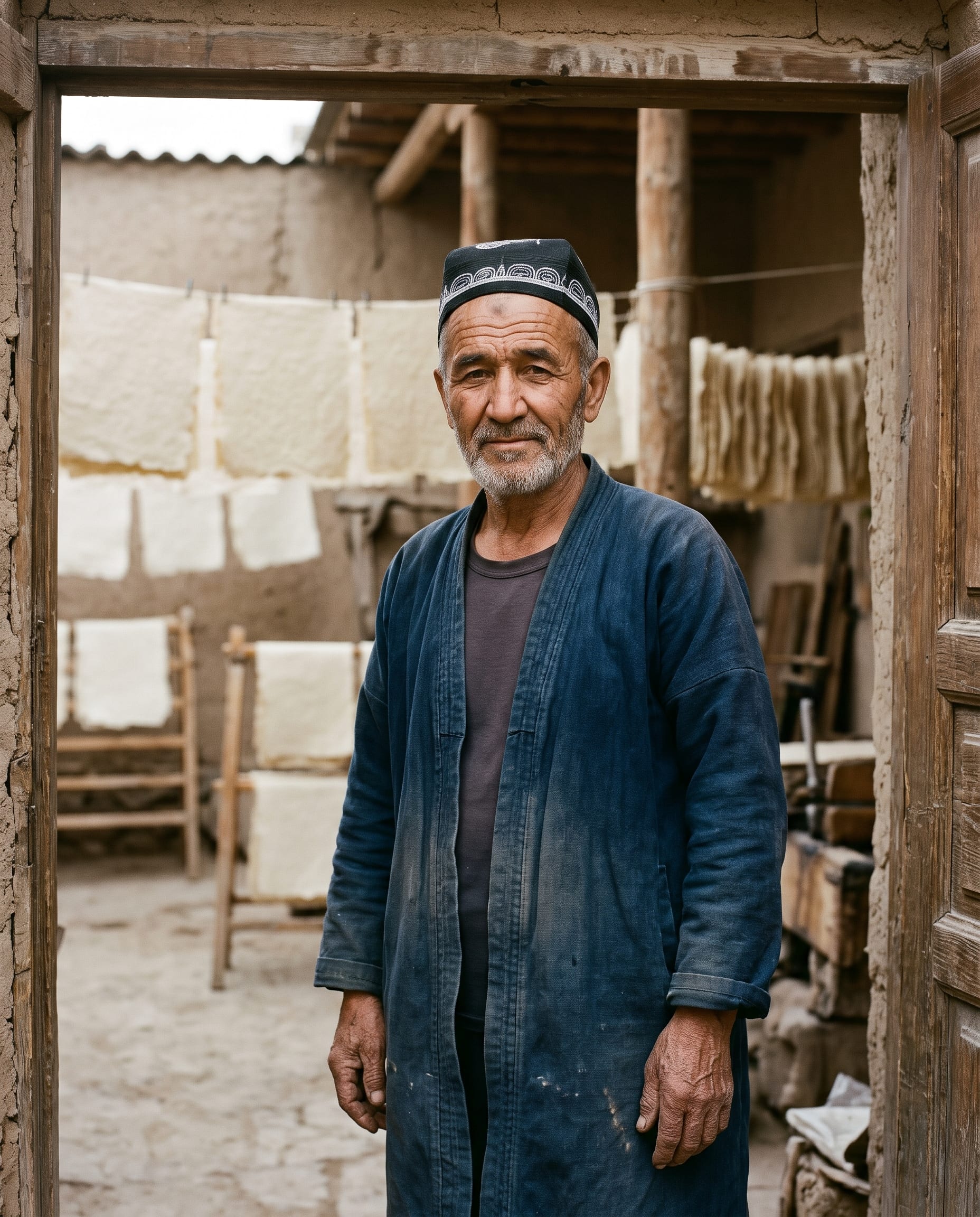
Bakhtiyor at the door of the mill.
Master papermaker and founder
Bakhtiyor Rakhimov
Bakhtiyor learned the craft in the years of the revival and built our water wheel by hand. He still forms the large folio sheets himself, and decides which batches are good enough to leave the atelier.
Dyer and sheet former
Dilnoza Rakhimova
Dilnoza looks after the indigo vat and the pomegranate dye pots in the courtyard. The colours on our wedding stationery are hers, mixed by eye and never the same twice.
Bookbinder
Farrukh Rakhimov
The youngest of the family, Farrukh sews every notebook and journal at a bench by the drying wall, using linen and indigo thread.
Workshop host
Malika Usmonova
Malika welcomes our visitors, translates for Bakhtiyor and has taught more than three thousand people to lift their first sheet from the vat.