Skip to content

Samarkand silk paper

A thousand years old, made this morning.

Sheets, notebooks and wedding stationery formed from mulberry bark at our water mill outside Samarkand, for calligraphers, artists and designers everywhere.

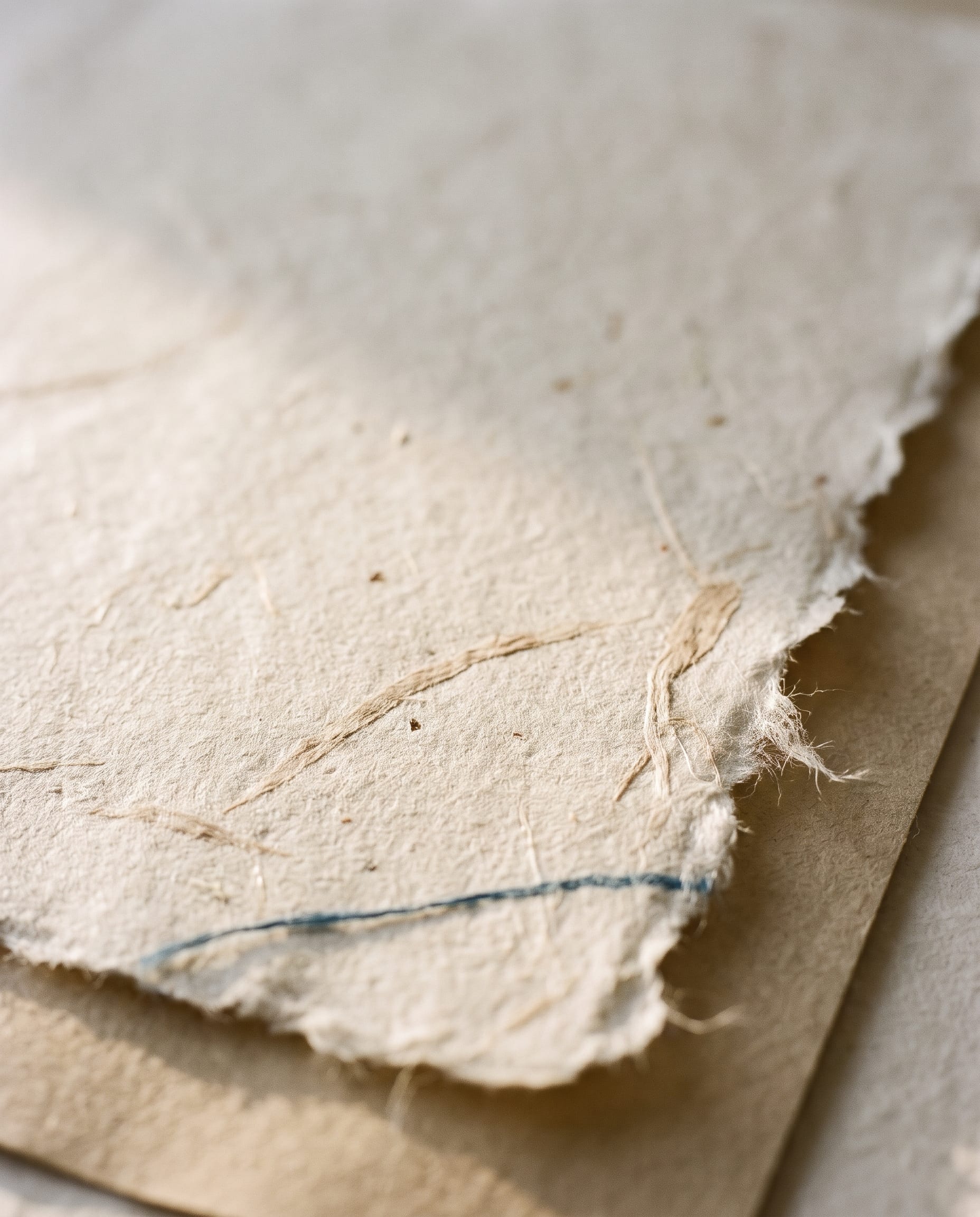
Close up of a polished sheet of handmade mulberry paper, its torn edge soft with loose fibres

Fig. 1. A polished sheet, its edge still soft with loose fibres.

qog‘oz

noun, Uzbek

1. paper. 2. a sheet to write on.

For eleven centuries in Samarkand the word meant something very particular: a sheet of mulberry bark, beaten by a water wheel and polished with a stone until ink glides across it and never bleeds. We still make it that way, a few hundred sheets a week.

steps, every one by hand or by water
5
strikes a minute from the water hammer
40
minutes of stone polishing for each sheet
10

The making

From branch to sheet, in five slow steps.

Nothing here is hurried and nothing is bleached. It takes about three weeks for a mulberry branch to become a sheet you can write on.

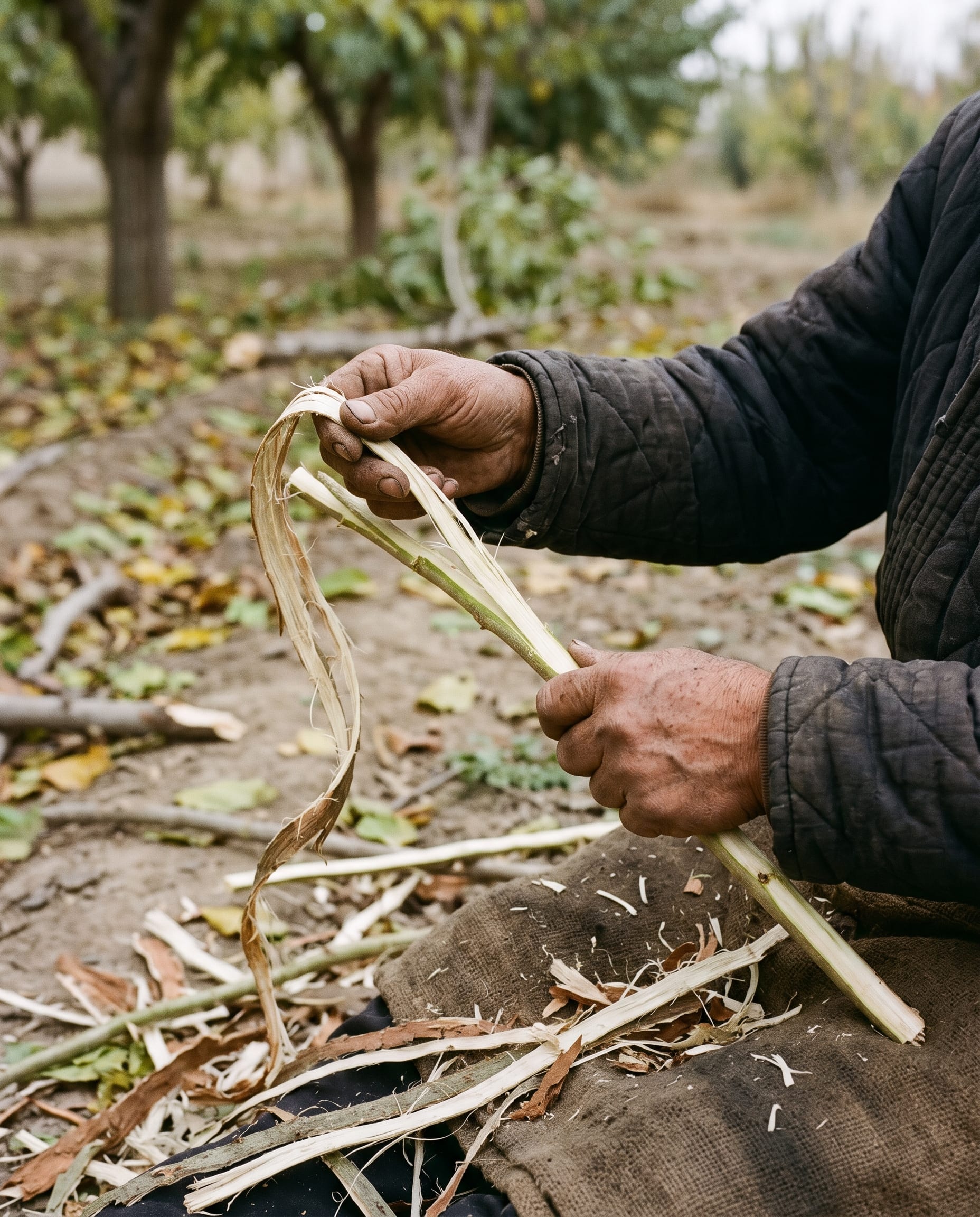
  1. Weathered hands stripping long ribbons of bark from young mulberry branches

    1Spring and autumn

    Bark harvest

    We cut young branches from the white mulberry trees that line our stream, the same trees that once fed Samarkand's silkworms. The bark is stripped while it is still green, the dark outer skin is scraped away, and only the pale inner layer is kept. Ten kilos of branches give about one kilo of fibre.

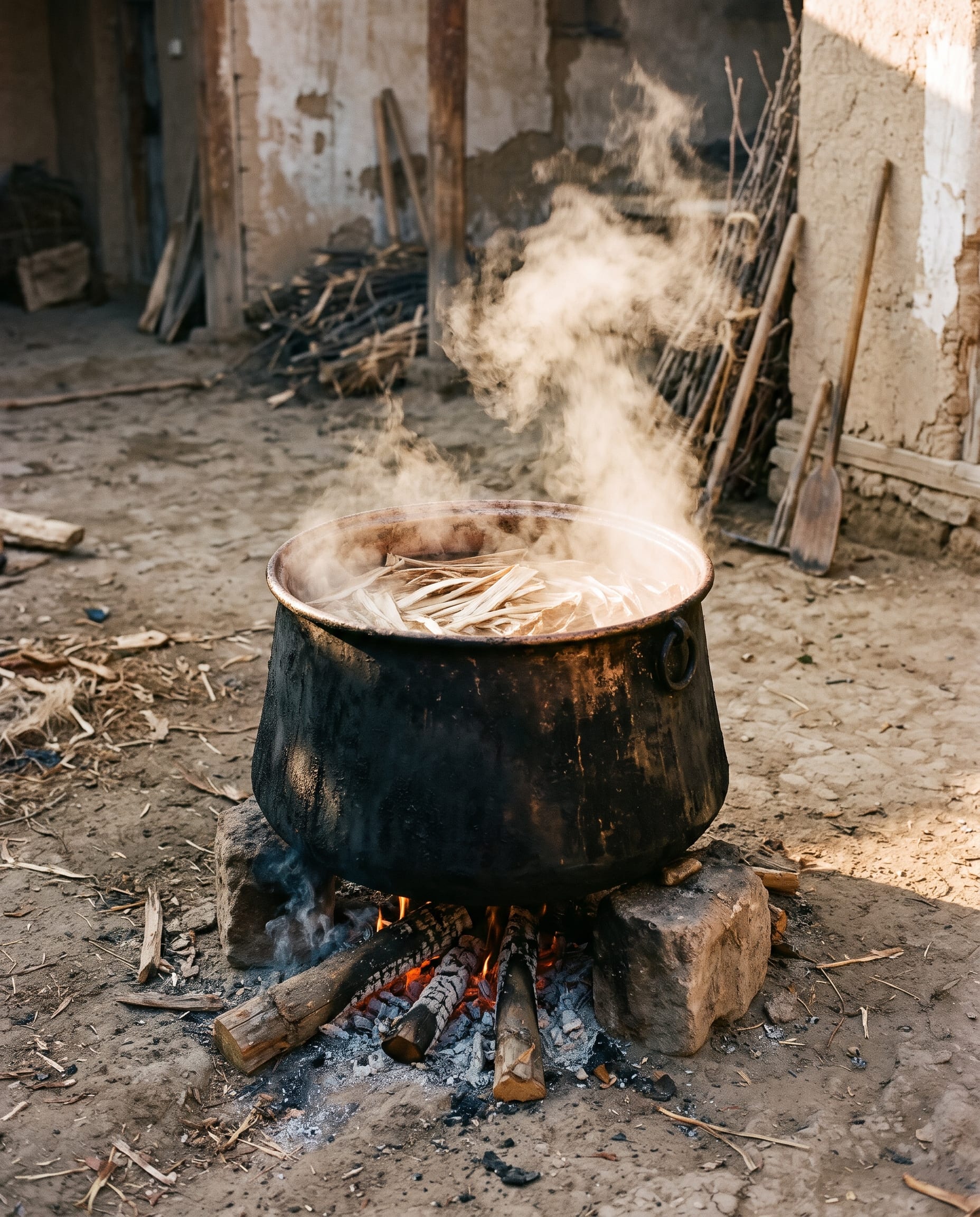
  2. A blackened copper cauldron of mulberry bark steaming over a wood fire in a courtyard

    2Six hours over a wood fire

    Boiling

    The inner bark goes into a copper cauldron with water and a little wood ash, and simmers until the stiff ribbons turn soft enough to pull apart with your fingers. Then it is rinsed in the stream, again and again, until the water runs clear.

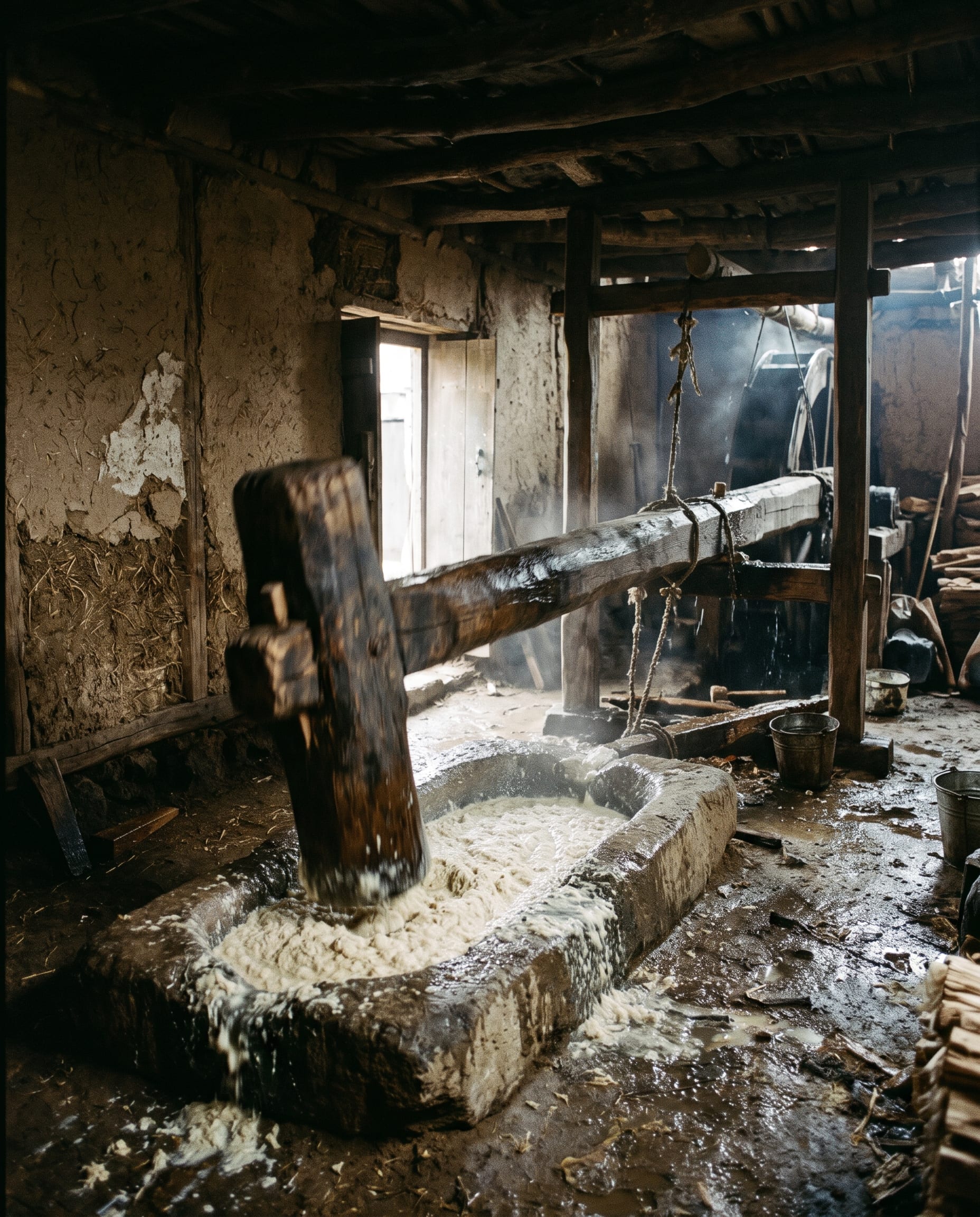
  3. A wooden hammer driven by a water wheel striking pale fibre pulp in a stone trough

    3A full day, without hands

    Beating with the water wheel

    Our wooden water wheel lifts a heavy hammer and lets it fall, about forty times a minute, onto the fibre in a stone trough. The stream does the work for a whole day. By evening the bark has become a creamy pulp, its long fibres separated but never cut, which is why the paper is so strong.

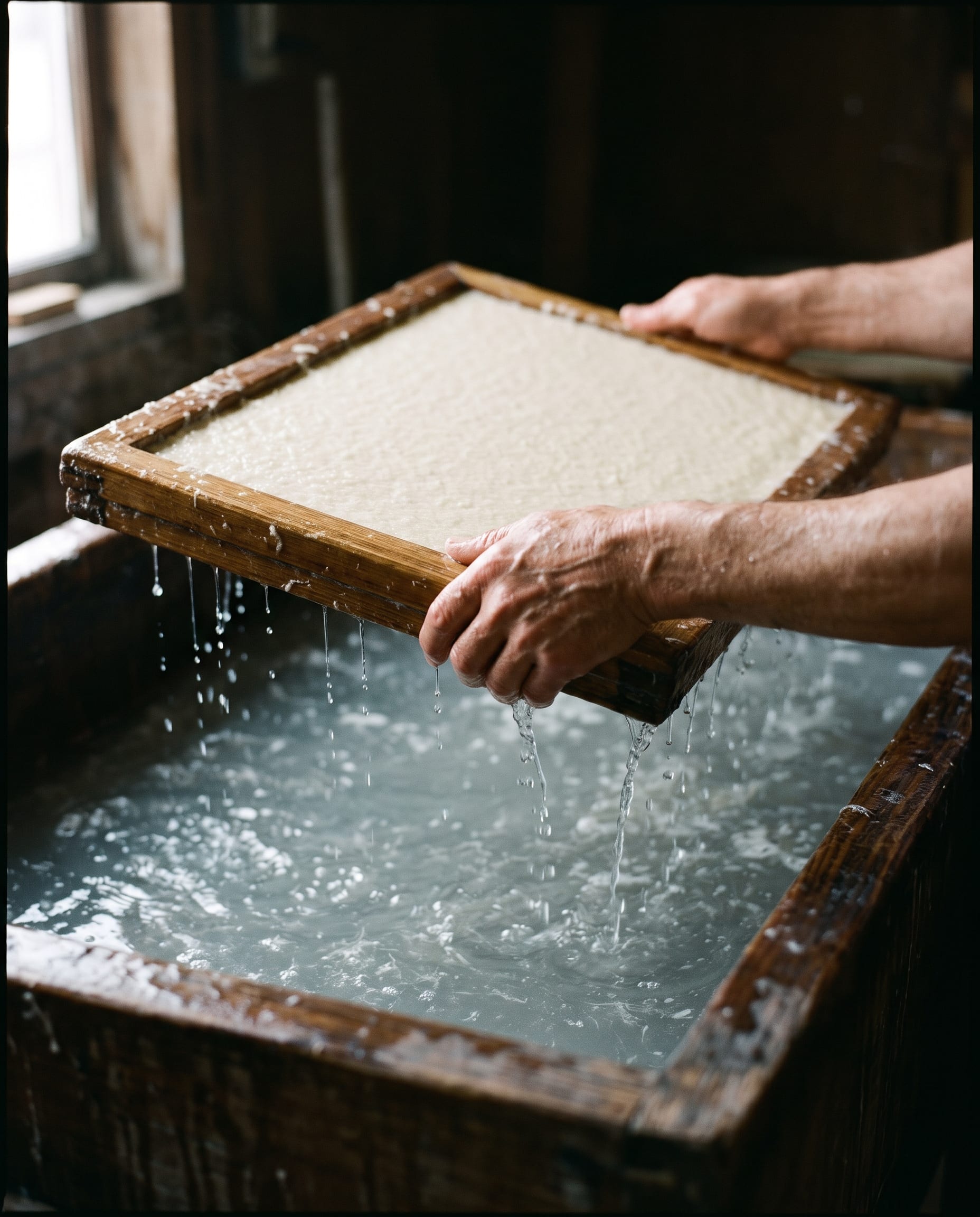
  4. Hands lifting a reed mould from a vat of water with a fresh sheet of pulp on it

    4One sheet at a time

    Sheet forming

    The pulp is stirred into a vat of clear water. The papermaker dips a fine reed mould, lifts it level and gives it a short shake, so the fibres lock together into a single even sheet. Each sheet is laid on a board and dried against a sunlit wall.

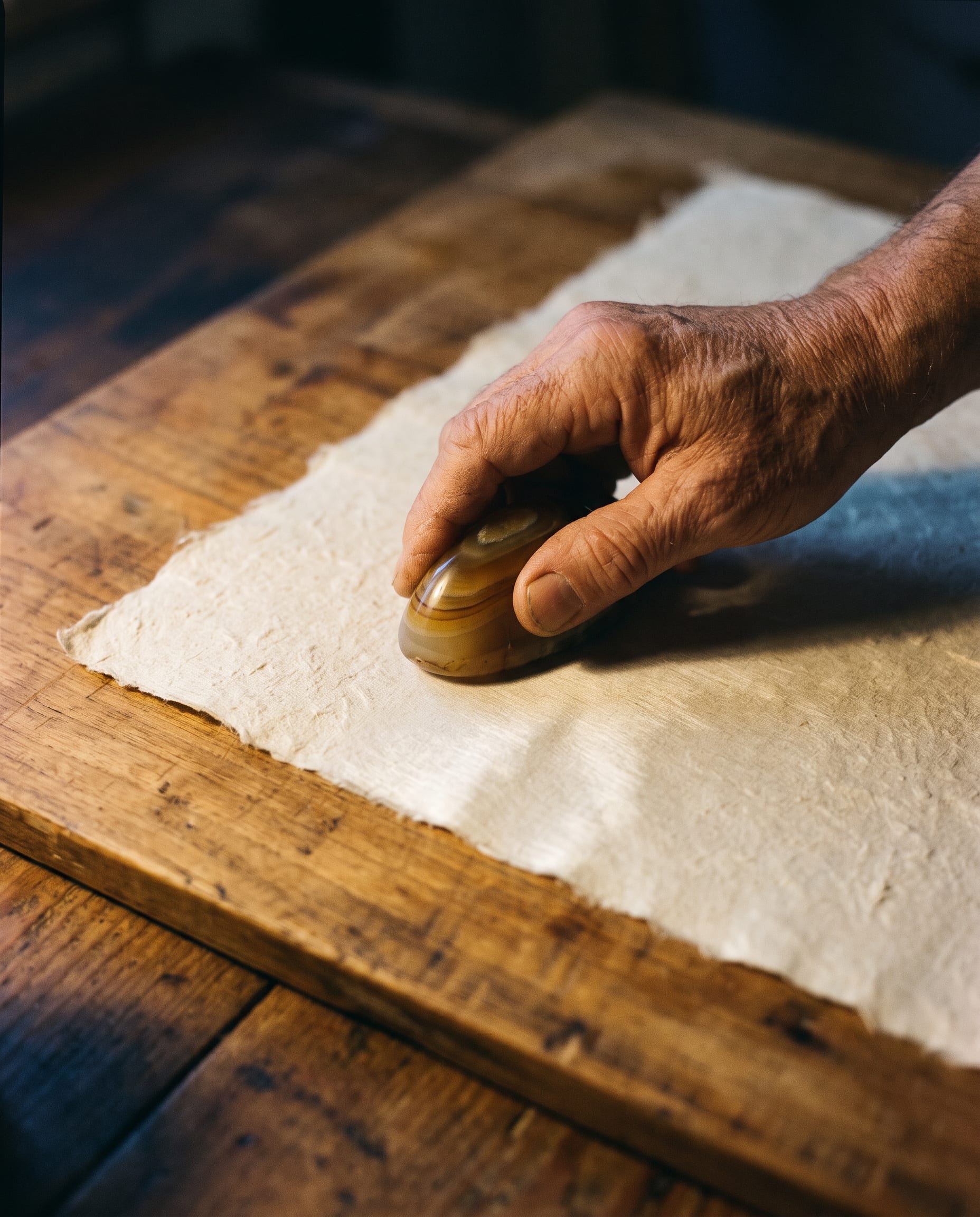
  5. A hand burnishing a cream sheet of paper with a polished agate stone

    5Ten minutes for every sheet

    Polishing with a stone

    Finally each dry sheet is laid on a smooth board and rubbed with a polished agate stone, stroke after stroke, until the surface closes and takes on a soft sheen. This is where the name silk paper comes from. There is no silk in it, only patience, and ink glides across it without ever bleeding.

Half-day workshops

Spend a morning at the mill, leave with paper you made.

Strip mulberry bark, stand beside the water hammer, lift your own sheets from the vat and polish one with an agate stone. Four unhurried hours in our courtyard, with tea, lunch and a fair amount of splashing.

Duration
4 hours, from 9:30
Price
$45 per person
Group
Up to 8 guests
Days
Tuesday to Sunday
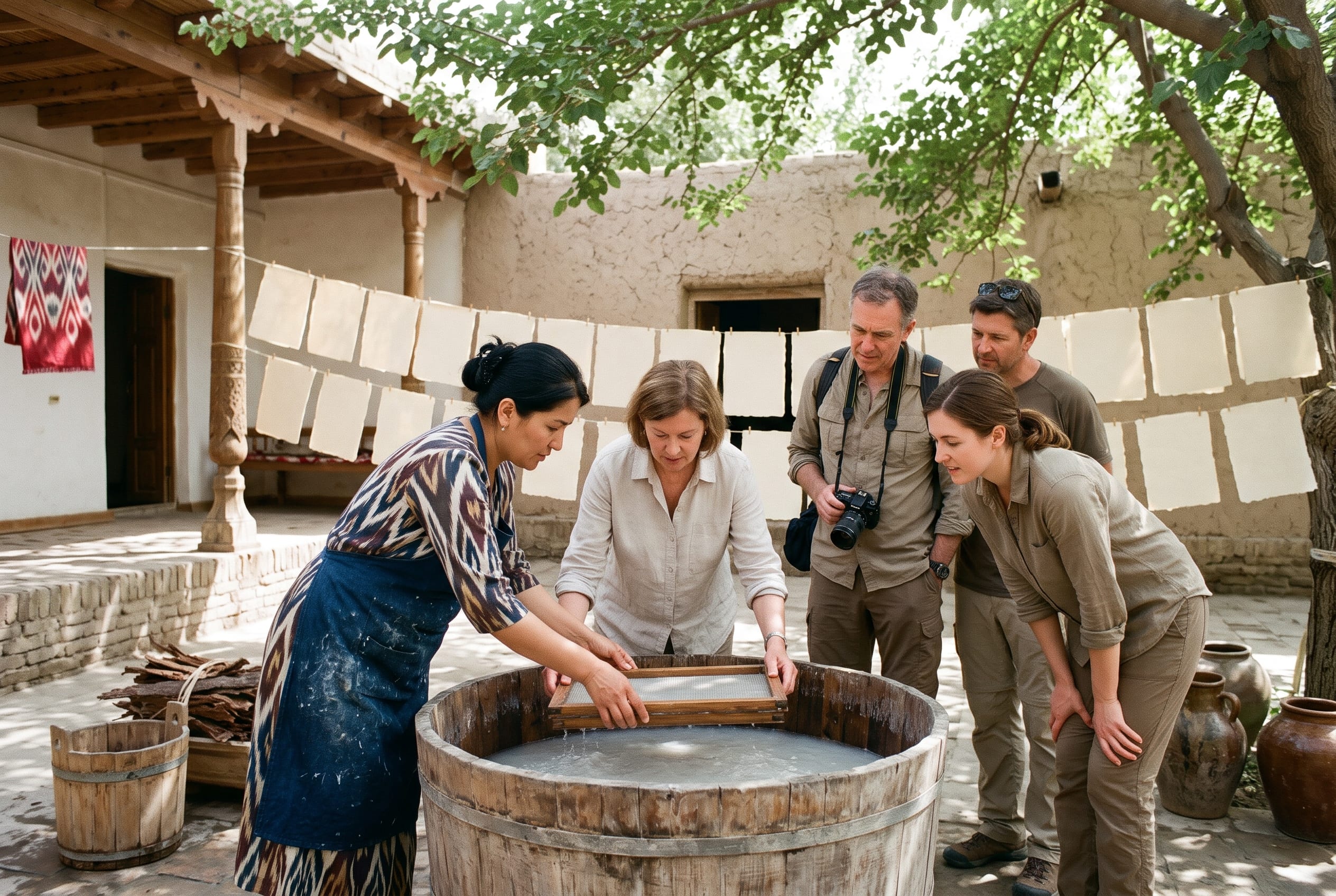
Visitors forming paper at a wooden vat in a sunlit courtyard, guided by a papermaker in an indigo apron

Your sheets dry overnight. We bring them to your hotel the next morning.

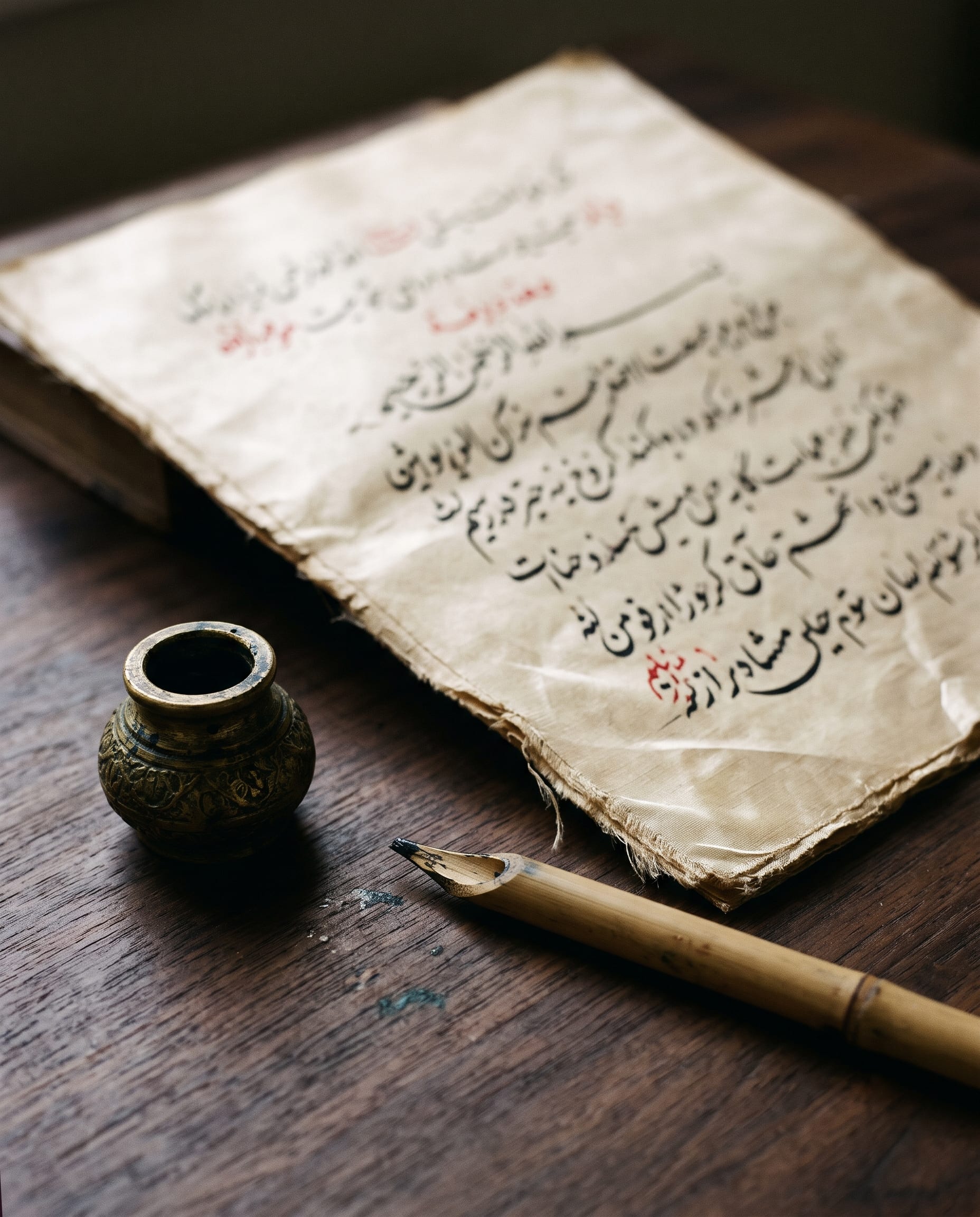
An old manuscript on polished cream paper beside a reed pen and a brass ink pot

Fig. 2. A scribe working a thousand years ago would recognise this surface at once.

The story of the craft

When Samarkand taught the world to write on paper

In the year 751, after a battle on the Talas river, the story goes that a few Chinese papermakers were brought to Samarkand as prisoners. They carried a secret the West did not yet know. Within a few generations the city’s mills were turning mulberry bark into sheets so smooth that scribes from Baghdad to Cairo wanted nothing else.

By the nineteenth century the water wheels had stopped. The craft came back only in our own lifetime, rebuilt from old manuscripts and the memories of a few elderly masters. Our atelier is one small part of that return.

“Among the specialities of Samarkand is paper, which has driven out the papyrus and parchment that were used before.”

Al-Tha’alibi, writing in the eleventh century
Read the full story and meet the makers
Qog’ozAtelier

Qog’oz is the Uzbek word for paper. Ours is still made from mulberry bark, river water and a polishing stone.

Visit

On a mulberry-lined stream, 14 km from the Registan

Samarkand region, Uzbekistan

Tuesday to Sunday, 9:00 to 18:00

Samarkand time, UTC+5

© 2026 Qog’oz Atelier. Every sheet made by hand near Samarkand.

Shipping worldwide from Uzbekistan